

Calenture
Mystic
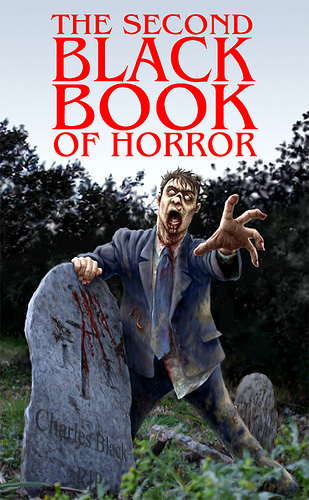
By Paul Mudie
Black Glass by Gary McMahon
Amygdala by David A Sutton
Now and Forever More by David A Riley
The Cold Harvest by Steve Goodwin
All Under Hatches Stow'd by Mike Chinn
On the Couch by Craig Herbertson
The Crimson Picture by Daniel McGachey
Squabble by D F Lewis
The Eye in the Mirror by Eddy C Bertin
The Meal by Julia Lufford
Onion by L H Maynard and M P N Sims
In Sickness and... by John Llewellyn Probert
The Pit by Rog Pile
I believe it’s a myth that classics of horror can only be found in the past. Certainly a great many originals are found in the past, Lovecraft, Poe, Machen, James and so on; but contemporary writers, building on early themes and techniques, sometimes produce work as good as or better than the writing which inspired it. It’s good to remember past glories. But I think it’s just as important to study what’s being done today.
I had the pleasant task of helping Charles Black by doing some proofreading for his second Black Book, and frankly the work arriving by email wouldn’t have been amiss in any of the anthologies of years before that we celebrate.
These synopses and impressions will appear in no particular order, just as they suggest themselves. End of long-winded 'intro'. The first story I want to do is Daniel McGachey's The Crimson Picture, because I haven't been able to get it out of my mind just lately.
The Crimson Picture by Daniel McGachey: Dr Lawrence receives a letter from his old classmate Drayton inviting him to discuss a curious matter which he thinks will be of interest to him, for “such was always your forte.” When Lawrence observes that Drayton appears to have aged well and makes a joking remark that possibly he has a portrait hidden in his attic like the fellow in that Wilde story, Drayton reacts dramatically. There is a picture, and a story relating to it, but he wants Lawrence to hear the story from the person who told it to him. This slightly labyrinthine way of weaving into the plot is a technique I’ve noticed a lot of good storytellers employ, casually drawing a reader down into the narrative.
Drayton takes Lawrence to a picture gallery and tells him: “There is one picture I wish I had never brought before human eyes.” The picture is listed in a catalogue as “Unknown subject – A Portrait in Crimson.” Mysteriously, the artist is apparently as anonymous as the picture’s subject.
That morning Lawrence had read a newspaper account of a commotion at the gallery when a picture had been slashed. Now it transpires that the picture was the crimson portrait, and the man who had attacked it, its artist – Hector Jardine, a man better known as a painter of landscapes.
At last, in the presence of the crimson portrait, hidden behind a silk curtain, Jardine begins his story. And he tells how he was commissioned to paint the thing, and how, like Gericault, he found that perhaps he was not exactly painting “from the life”.
Last edited:
