Sought in Translation

georg-trakl-eine-biographie-mit-bildern-texten-und-dokumenten.jpg


Georg Trakl: Eine Biographie by Hans Weichselbaum

The life of Salzburg's most famous poet ended early: Georg Trakl died at the age of 27 on November 3, 1914 in Galicia from a cocaine overdose. This biography contains new discoveries that correct previous biographical accounts. Hans Weichselbaum tells the difficult life story of a talented young man, beginning with the family's move to Salzburg, where the Trakls succeed in climbing up the social ladder. Shortly after the turn of the century, Georg Trakl begins with early literary attempts, these are - quite unusual for the later poet - plays. Around the same time, the first experiments with various drugs also took place, from which Trakl would not be able to get rid of throughout his life. After the outbreak of the First World War in 1914, he volunteered as a paramedic. The atrocities he experienced at the Battle of Grodek plunged him into despair, a nervous breakdown and attempted suicide made him a victim himself. Hans Weichselbaum brings together the life story of the Salzburg expressionist Trakl with new research findings. The biography was revised to mark the 100th anniversary of Trakl's death.

(Google translation)
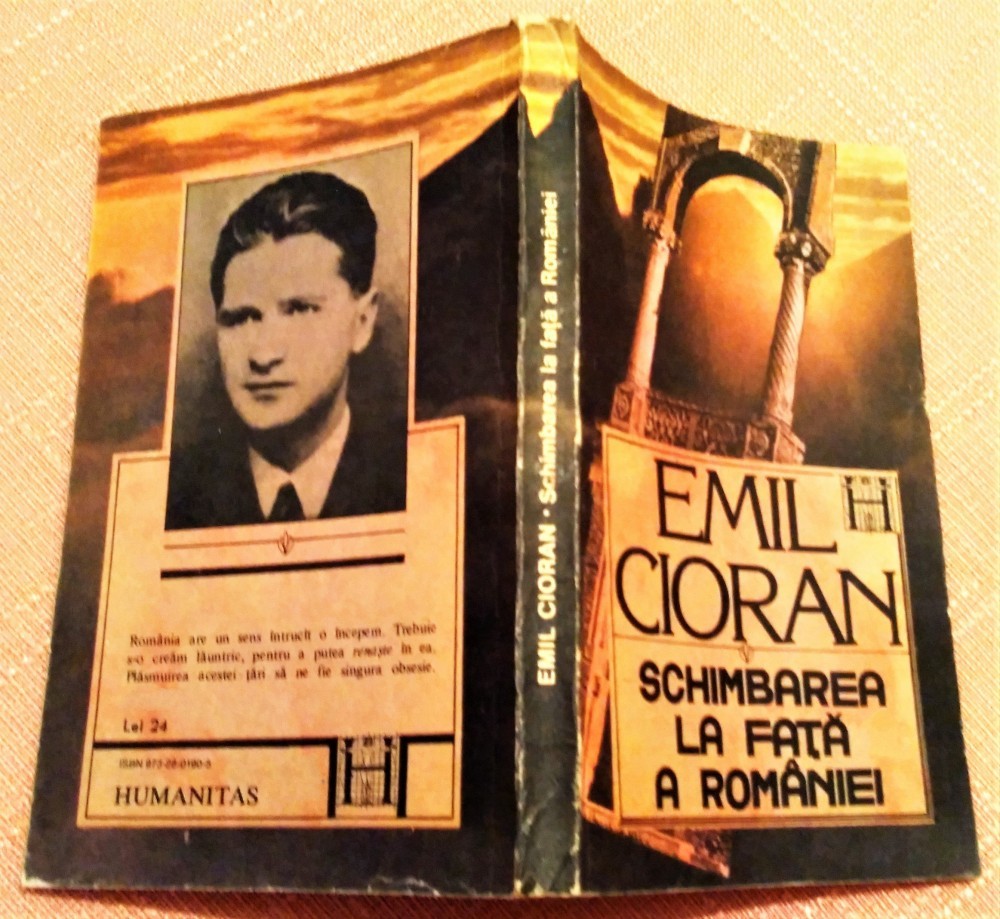
 
A youthful Cioran's mystical fascism book.

9ee3122c7dc4cb8d65388ca089158a7a-963094-1000_1000


Even so, as Cioran realized, much of human civilization is a monument to our pathological denial of death, which is paradoxically expressed through our heightened ability to end life. People have sought down the centuries to affirm their mastery of death by wielding it as a weapon: through their mass disposal of other people imposing visions of reality that mold it in their own, immortalized image. And again demonstrating that even the most educated and penetrating of minds are not immune to totalitarian “solutions”, Cioran would himself briefly succumb to the grotesque allure of fascism in the 1930s, writing a disturbing paean to it called The Transfiguration of Romania (1936). While he later renounced fascism, regretting his support for an ultra-nationalist and antisemitic Romanian organization called The Iron Guard, across his work there are unmistakable authoritarian and elitist leanings which in part explain – but hardly excuse – his shameful sympathy for a organization he would later describe as “demented”.
 
I asked ChatGPT if it can translate books?

Response:

Yes, ChatGpt is a large language model that uses artificial intelligence to process natural language text. With this tool, you can translate eBooks from one language to another and generate a bilingual epub book that includes both the original and translated text1. You can also make ChatGpt translations more accurate by providing several large texts and their verified translations. You can then prompt ChatGpt to deduce the right translation of words and phrases from the provided samples and apply it when translating text involving a similar language pair2.

We already have the AI tools to not only translate On the Tragic by Peter Wessel Zapffe and The Book of Delusions and The Transfiguration of Romania by E.M. Cioran, but to have them in audio format narrated by the authors.
 
Last edited:
71bGXUCgnkL._SY425_.jpg


This sounds like it is biased, but I would still like to read it.

(Google translation)

Literary Analysis. Since the rise of fascism and the Nazis' hatred of Jews, the term "racism" has taken on a more special meaning. H.P. Lovecraft, a fantasy writer, is well known to his followers for his Cthulhu mythos. His strange fiction, populated by monsters and aliens, allowed him to exorcise his fears of the degeneration of the race by mass immigration. He supported fascism and had a blind admiration for Mussolini and Hitler, praising their courage in the face of the bastardization of white civilization. Troubled by questions of race, the "stranger" served as a prototype of the monster.

William Schnabel, a scholar of American culture and literature, has meticulously researched Lovecraft's correspondence, biography, and fiction, to reveal the true faces of his horror. A naïve reading of his work is no longer possible after Lovecraft and the race.
 
picture.php


Das Gefängnis der Freiheit (The Prison of Freedom) | Michael Ende

It is absolutely criminal that a proper English edition of this masterpiece does not exist, apart from an eBook that I see was released last year. A couple of years ago, there was an English edition of the Mirror in the Mirror - after it had been out of print for many, many years - that I purchased with extreme speed and prejudice, but for some reason it did not include the illustrations by the author's father, a surrealist painter of some renown, that were not only included in the German original, but in all other translated editions as well, from Greek to Korean.

You should absolutely read the Mirror in the Mirror and The Prison of Freedom.
 
I, too, would like to see some translations of Marcel Bealu's short stories. And there is a Spanish writer named Angel Olgoso who has written a lot of stories in the fantastic/speculative vein, but sadly he does not seem to have been translated into English.
 
51OGDMJ4mLL._SY425_.jpg


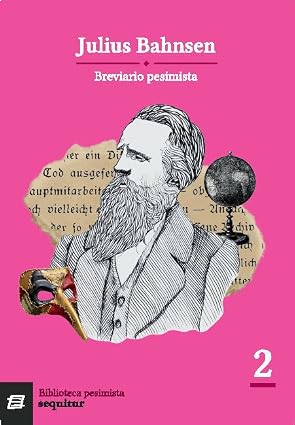
Das Tragische als Weltgesetz und der Humor als ästhetische Gestalt des Metaphysischen by Julius Bahnsen

The Tragic as Universal Law and Humor as the Aesthetic Form of the Metaphysical

The philosopher Julius August Bahnsen (1830-1881) is considered one of the most important followers and educators of Arthur Schopenhauer. Bahnsen completed his studies in philosophy and philology in Kiel. His professional life led him to the grammar school in Anklam and later to the progymnasium in Lauenburg in Pomerania. Throughout his life, he was occupied with the life and work of Arthur Schopenhauer, whose theories he analyzed and developed further. Bahnsen's main works include the publication "On the Philosophy of History" (1871) and "The Contradiction in Knowledge and Nature of the World" (1880-1882). Bahnsen laid down the real-dialectical side of his teaching in his book "The Tragic as World Law and Humor as the Aesthetic Shape of the Metaphysical", which is remarkable for its baroque language, often spiced with dashing humor.

https://www.youtube.com/watch?v=GJ4Pt6_Z68c
 
Back
Top