What is the best book that you read last year?

The best book I read in 2021 was Butcher´s Crossing by John Williams

A very accurate portrait of how random life can be and the dangers and little pleasures that occur when one tries to find "meaning" in life.

Our protagonist leaves Harvard and tries to turn his life around by joining a buffalo hunting expedition with some experienced men. Things don´t go as planned. Not one bit.

I have been deliberately avoiding this novel for years. I came across the title when I was reading reviews for McCarthy's Blood Meridian. There are few things I hate more than hunters and cruelty to animals. My misanthropy has peaked. I don't think reading this will do me any good. I read his first novel Nothing But the Night. It was decent and had some interesting insights, but it didn't do much for me. But it is held in far less regard than his other novels.


buffalo-slaughter.jpg


How can you not detest humanity?
 
Last edited:
'A Trick of the Shadow' by R. Ostermeier (Broodcomb Press).

Actually, one of the best books of weird fiction I have read in the past few years. I think a lot of Ligottians would also like it.

Its a small run of 250 copies but still (amazingly to my mind) in print. And it is cheap!

You can read my comments upon it (for whatever they are worth) on Goodreads:

https://www.goodreads.com/review/show/3750443613

I picked this up on your recommendation, thank you!
 
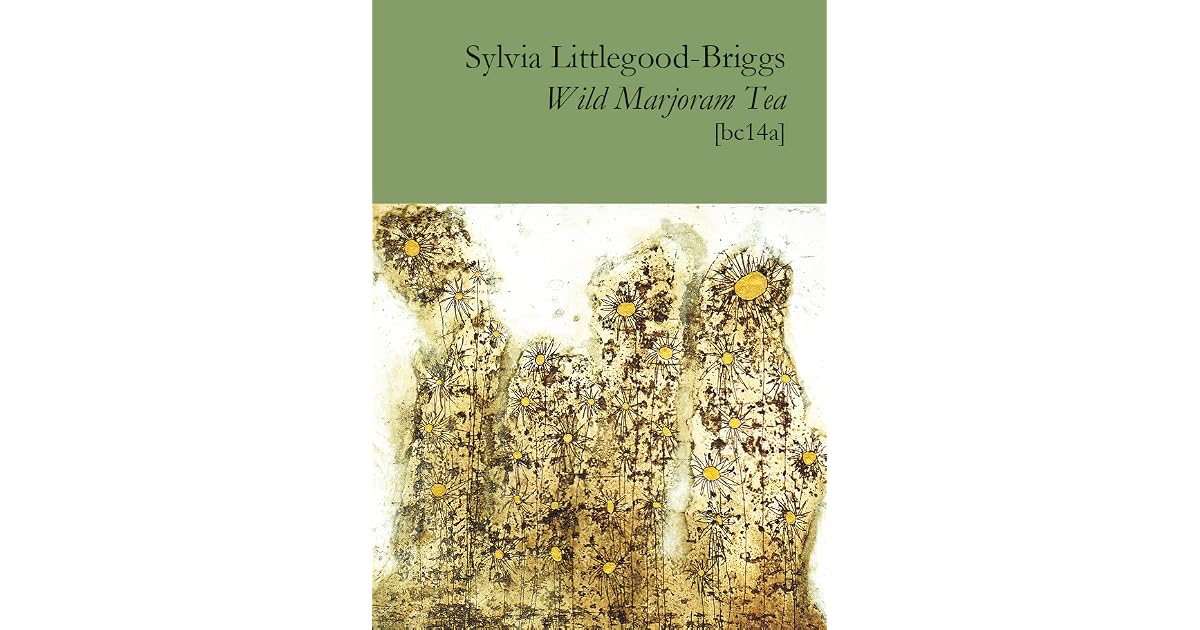
Sidereal press has written a review I could not seek to better but whatever… iknow victorial lands, belbury poly. I read lIttle. Big and Lud in the mist (before NG) I have Briggs encyclical and dwelled in Machens lands but buy Marjoram Tea whilst thee can…


58952677._UY630_SR1200,630_.jpg
 
Last edited:
"I read lIttle. Big and Lud in the mist (before NG) I have sylvias encyclical and dwelled in Machens lands but buy Marjoram Tea whilst thee can…"

Thanks for mentioning this book! Those references are personal favorites so was intrigued, (tho no link in your post.) Took awhile but found the old review on Side Real Press' sidebar, and that led to the publisher, Broodcomb Press. The HB is sold out but they still have PB editions.

Books Broodcomb Press
 
Seiobo There Below, by Laszlo Krasznahorkai (trans. Ottilie Mulzet)

This is one of the best books I've ever read. .


I would be the first to say I have read this book, but in so saying, indeed in endeavoring to think I might have said that I did, and the horse, so much thinking back is reflected upon a horse and a horse reflecting upon itself and the book I read, but outside everything is moving both without myself and the horse and will be moving forever without us, myself and the horse and yet in this moment I think back to another moment when I was born and I did not know myself or a horse and yet knew myself to be then as now irrefutable..


not sure I liked it
I certainly liked the Venice chapter Christo Morto - think I have tracked down the pertinent Bellinini but happy to be shown

what was your second favourite?


I would highly recommend


https://www.nyrb.com/products/when-we-cease-to-understand-the-world?variant=37890166784168


to you if you like Seibo - I particularly liked the Grothendieck chapter which could absolutely be read as Ligottian
 
Seiobo There Below, by Laszlo Krasznahorkai (trans. Ottilie Mulzet)

This is one of the best books I've ever read. .

I would be the first to say I have read this book, but in so saying, indeed in endeavoring to think I might have said that I did, and the horse, so much thinking back is reflected upon a horse and a horse reflecting upon itself and the book I read, but outside everything is moving both without myself and the horse and will be moving forever without us, myself and the horse and yet in this moment I think back to another moment when I was born and I did not know myself or a horse and yet knew myself to be then as now irrefutable..

not sure I liked it
I certainly liked the Venice chapter Christo Morto - think I have tracked down the pertinent Bellinini but happy to be shown

what was your second favourite?

I would highly recommend

https://www.nyrb.com/products/when-we-cease-to-understand-the-world?variant=37890166784168

to you if you like Seibo - I particularly liked the Grothendieck chapter which could absolutely be read as Ligottian

C'mon, to properly parody K. you need to go on for at least 10,000 words. :) He's a master of syntactically recomplicated prose, and I do like it.

I bought the Labutat a few months ago, primarily for the Grothendieck chapter, and that is the only chapter I've read so far. For a fascinating, somewhat comprehensible (meaning, I think I sort of comprehend it) philosophical overview of what Grothendieck was doing with math, I highly recommend the Grothendieck chapter in Fernando Zalamea's Synthetic Philosophy of Contemporary Mathematics.

Best book I've read recently (just finished it) -- Mark Wilson's Wandering Significance: An Essay on Conceptual Behavior. Excellent book on use of concepts in analytic philosophy and elsewhere. Against trying to set up more-or-less invariant conceptual schemes (the legacy of B. Russell, et al). Also against trying to set up schemes of meaning-holism to take their place (as Quine, Kuhn, late Wittgenstein did). Against instrumentalist claims that some narrow formalism gives the end-all semantic picture of anything. Against the extremes of pragmatism (Wilson calls himself a "pre-pragmatist" instead). Against putting logical theory first and empiricism second (Oliver Heaviside, lambasted by theorists in his time and later vindicated by advances in theoretical understanding, is in many ways the intellectual hero of the book). In favor of looking very closely at the sorts of conceptual work that applied mathematicians, engineers, and (non-quantum) physicists have to do. Many lengthy examples and "digressive curios" (Wilson's term) buttressing his points. Highly literate (though with too many misspellings and occasional usage errors), colorfully and humorously written, historically erudite (context is often crucial--one of the themes of the book), and vastly more scientifically and mathematically informed (in great detail!) than philosophy of this sort usually is. Loved it. I'm going to have to read Mark Wilson's other books. I see he has a forthcoming book titled Imitation of Rigor: An Alternative History of Analytic Philosophy. Having read Wandering Significance, I think I know where he's going with that, but I'm still eager to read it. "Imitation of Rigor." Ha!

I'm currently reading Gary J. Shipley's On the Verge of Nothing: Pessimism's Impossible Beyond (which I had put aside for the Wilson book). As you might expect, there is some discussion of Ligotti in this book, along with what look to be interesting chapters on Pessoa and Walser's microscripts.
 
Last edited:
I highly recommend the Grothendieck chapter in Fernando Zalamea's Synthetic Philosophy of Contemporary Mathematics.


Have been looking through this but it far exceeds my level of philosophical and even further exceeds my mathematical comprehension, still fascinating for the quotes and metaphors - thanks.


Its like a real life wizard from Vance or somewhere deigns to explain the practice of magic to you and you can appreciate its beautiful, dangerous and powerful - you just can't even begin to follow it.


Mark Wilson book also sounds fascinating.
 
I highly recommend the Grothendieck chapter in Fernando Zalamea's Synthetic Philosophy of Contemporary Mathematics.

Have been looking through this but it far exceeds my level of philosophical and even further exceeds my mathematical comprehension, still fascinating for the quotes and metaphors - thanks.

Its like a real life wizard from Vance or somewhere deigns to explain the practice of magic to you and you can appreciate its beautiful, dangerous and powerful - you just can't even begin to follow it.

Yeah, I can't pretend to understand it either. Zalamea's overview in terms of Grothendieck's metaphors, and his description of G.'s styles and methods--I can only read it as some kind of witchery with ultra-high-level abstractions. Still find it fascinating. I keep thinking I should be able to learn something from G.'s thinking strategies (as described by Zalamea) but haven't managed to do that.
 
It's that time of year again. Off the top of my head. I'm probably forgetting something.

Nonfiction: On the Verge of Nothing: Pessimism’s Impossible Beyond
by Gary J. Shipley

Fiction: Mouth Full of Earth by Branimir Šćepanović, Lovett F. Edwards
(Translator)
 
It's interesting to come across this thread from two years ago, bendk! Your enthusiasm for "Kolyma Tales" by Varlam Shalamov still shines through in your post. It's always a pleasure to discover books that resonate deeply with us. The insights you provided about the differences between translations and editions of the book are quite thought-provoking. Translation choices can indeed significantly impact the way a story is perceived by readers. If anyone's looking for more reading recommendations, you can explore Colleen Hoover's books in order at https://bookwormera.cоm/colleen-hoover-books-in-order/. It's amazing how the world of literature continues to evolve, and it's threads like these that keep the conversation alive even years later.
 
Last edited:
This is quite interesting as I generally don't measure my reading in books but more in authors. If I want to pick someone up (particularly if they're historically or culturally significant) I will often read both a very early work and a very late work, so I can get some sense of their artistic evolution over time. With that said, I read two authors last year which were two of my most significant discoveries this decade: Henry Green and Cesare Pavese.

Henry Green is a very overlooked English modernist. I read three books of his: Caught, Concluding and Back. I was immediately taken in by the titles alone, as I always find one word titles mysterious and interesting. Green was a master of this particular art in that the one word in his title is often steeped with irony and double meaning, yet is at the same time terribly apt. Take Caught, a tale about firefighters in London at the height of the blitz, and how the locker room banter and the confining of men, women and children to a single space allows the most terrible kind of malicious rumour and gossip to spread like wildfire, to the point where it is like living life under constant surveillance from a camera, until (inevitably) one gets CAUGHT doing things they really shouldn't.

Pavese, on the other hand, is one of those constantly inward looking types like Proust. He first came to my attention as Thomas Bernhard mentioned him in an interview as an author he was obsessed with and having read him I can really see the influence. I read two by him last year, Among Women Only and The Moon And The Bonfires. It's strange, in many ways, to read him as there is a constant and visceral sense of isolation and lack of human warmth to the point where there were points I had to put the book down for a while. It follows many of these dejected characters across a war torn and ravaged Italy where terrible secrets seemingly hide round every corner, such as the latter novel where the narrator gradually comes to realize that almost everyone he grew up with met with a terrible and tragic fate following the Nazi invasion and that he is now disconnected utterly from the world of his childhood. Such as what happens to a local beauty whom the narrator had an affair with, who is revealed to have been executed as a Nazi spy by the partisans and her body burnt on a bonfire. It's a really affecting portrait of the world and of existence, and one that seems even more relevant today following things like the Russian invasion of Ukraine.
 
Last edited:
Favorites of 2023

Novel: The Star Diaries by Stanislaw Lem. Runner-up: So Beautiful and Elastic by Gary J. Shipley
Graphic Novel: Some Notes on a Nonentity: The Life of H.P. Lovecraft by Sam Gafford and illustrated by Jason C. Eckhardt
Special: Pictures of Apocalypse by Thomas Ligotti and You with Your Memory Are Dead by Gary J. Shipley
Short Story: "A Song for Barnaby Jones" by Anna Taborska and illustrated by Reggie Oliver
Nonfiction: Heidegger in Ruins: Between Philosophy and Ideology by Richard Wolin
 
Last edited:
My favorite cosmic horror collections from last year are:
The Puppet King and Other Attonements - Justin A. Burnett
The Envious Nothing - Curtis M. Lawson
The Immeasurable Corpse of Nature - Christopher Slatsky

I wasn't familiar with either Burnett or Lawson, I'm really happy I took a chance and read their work. I can't wait to see what else they come up with.

I read the first two novels in Derek Raymond's Factory series:
He Died with His Eyes Open
The Devil's Home on Leave

Raymond is very dark. I think he would appeal too many members of this forum.

Two by Laird Barron:
Joren Falls
The Wind Began to Howl

Last but never least:
Pictures of Apocalypse - by you know who
 
Not necessarily books that came out this year, but my favorite reads of 23

The St. Perpetuus Club of Buenos Aires - Eric Stener Carlson
McSweeny's Issue 71: Horror Stories edited by Brian Evenson
Graphic novel: Ice Cream Man (deluxe volumes 1 and 2)
Boys in the Valley - Philip Fracassi
Pale Fire - Nabokov

And I second the other post here, very, very happy to have all the beautiful Chiroptera Press editions that came out this year.
 
The best books I read in 2023:

The Quest of the Holy Grail
One Morning, Jessica Hagy
Ezra Slef: the Next Nobel Laureate in Literature, Andre Komarnyckyj
Intrusions, Robert Aickman
Kingdoms of Elfin, Sylvia Townsend Warner
Frodo's Wound, Krishnan Venkatosh
House of the Nine Devils, Johannes Urzidil
The Last Bell, Johannes Urzidil
The Unbearable Lightness of Being, Milan Kundera
There Are Doors, Gene Wolfe
The Saga of the People of Laxardal + Bolli Bollason's Tale
Delivery Artifacts, Jude Golby and Another
The Exalted and the Abased, Damian Murphy


And some severe disappointments:

The Darkest Part of the Woods, Ramsey Campbell
I'm trying. The atmosphere was very compelling, and some of the scenes were strong, but it seemed like it needed more work. And the ending was very creepy and good.
The Ruins of Contracoeur, Joyce Carol Oates This one was seriously bad. There were some good ideas, but the stories were under developed and poorly executed.
The Case Against Satan, Ray Russell
The Man Who Collected Machen, Mark Samuels
Boys In the Valley, Philip Fracassi
I haven't finished this one yet, but it's heading downhill fast. Bummer.
 
Favorites:

(Fiction)
When we cease to understand the world - Benjamin Labatut
Notice - Heather Lewis

(non fiction)
The Hexadic System - Ben Chasny


Favorite rereads:

(fiction)
Gary J. Shipley - The Unyielding


(Non fiction)
Conversations - Jorge Luis Borges and Osvaldo Ferrari
How to make money in your spare time - J. Rice


Least favorites:

In Darkness - Leon Bloy
Woom - Duncan Ralston
 
My favorite cosmic horror collections from last year are:
The Puppet King and Other Attonements - Justin A. Burnett
The Envious Nothing - Curtis M. Lawson
The Immeasurable Corpse of Nature - Christopher Slatsky

I wasn't familiar with either Burnett or Lawson, I'm really happy I took a chance and read their work. I can't wait to see what else they come up with.

I read the first two novels in Derek Raymond's Factory series:
He Died with His Eyes Open
The Devil's Home on Leave

Raymond is very dark. I think he would appeal too many members of this forum.

Two by Laird Barron:
Joren Falls
The Wind Began to Howl

Last but never least:
Pictures of Apocalypse - by you know who

I am about to start a Derek Raymond book today!
 
Back
Top